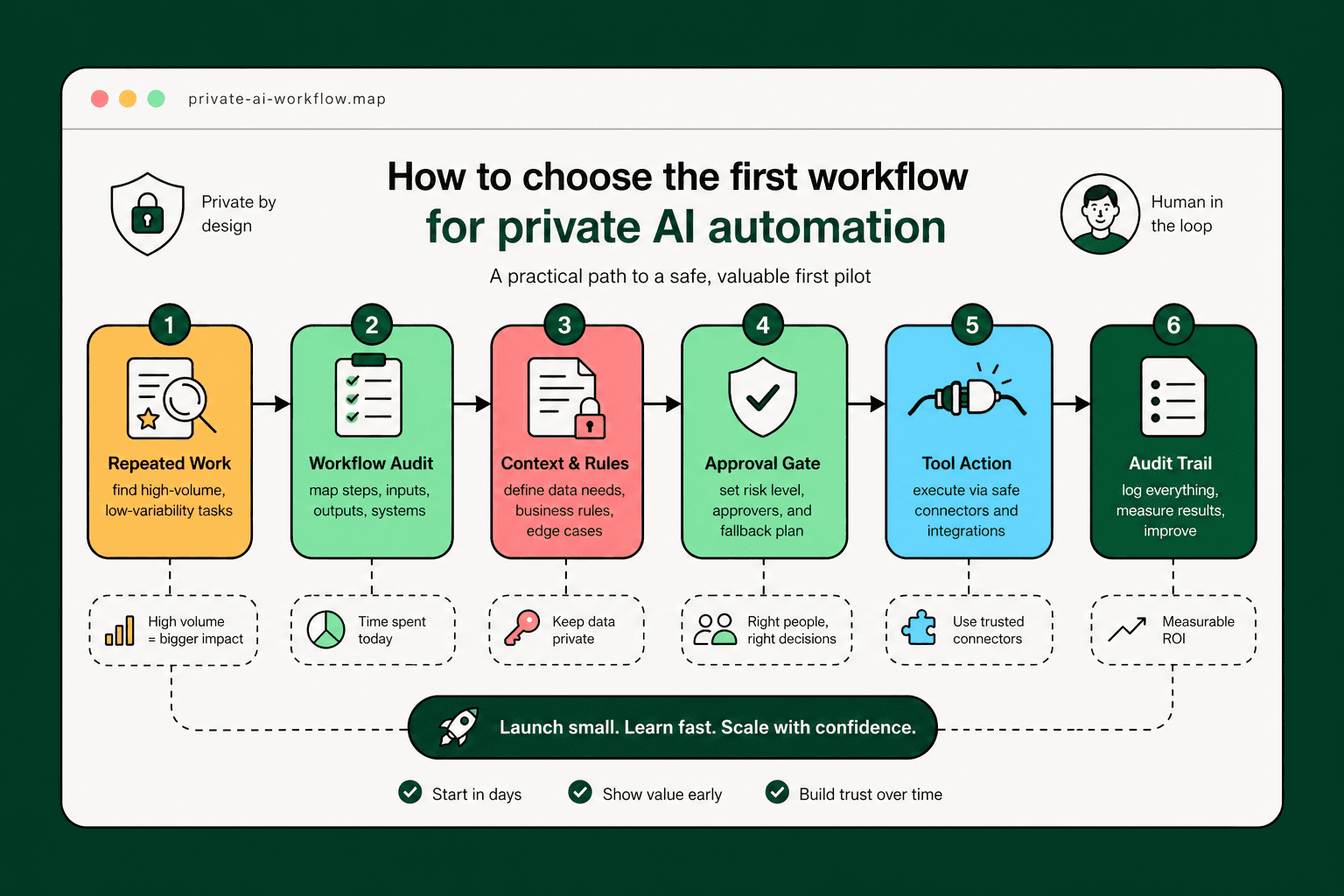
How to choose the first workflow for private AI automation
A practical operator guide for picking the first AI workflow: repetitive enough to matter, safe enough to ship, and connected enough to prove value.
Read insightField Notes
Field notes on where automation should start, how to protect business context, and how AI becomes useful inside real workflows.
Latest insight

A practical operator guide for picking the first AI workflow: repetitive enough to matter, safe enough to ship, and connected enough to prove value.
Read insightAll field notes

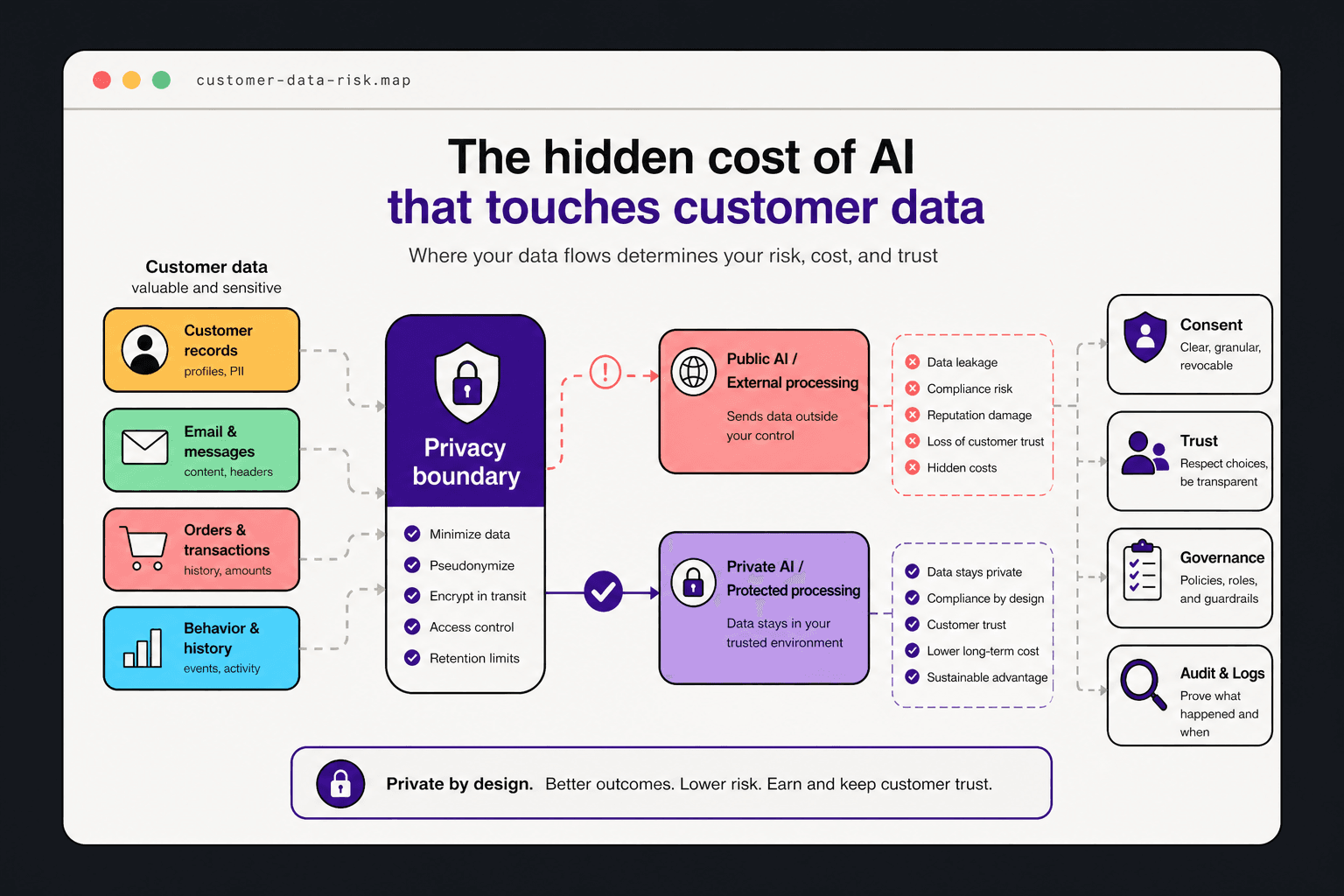
When AI workflows process customer information without a clear privacy boundary, the risk does not stay technical. It becomes a trust problem — and trust problems compound.
Read insight
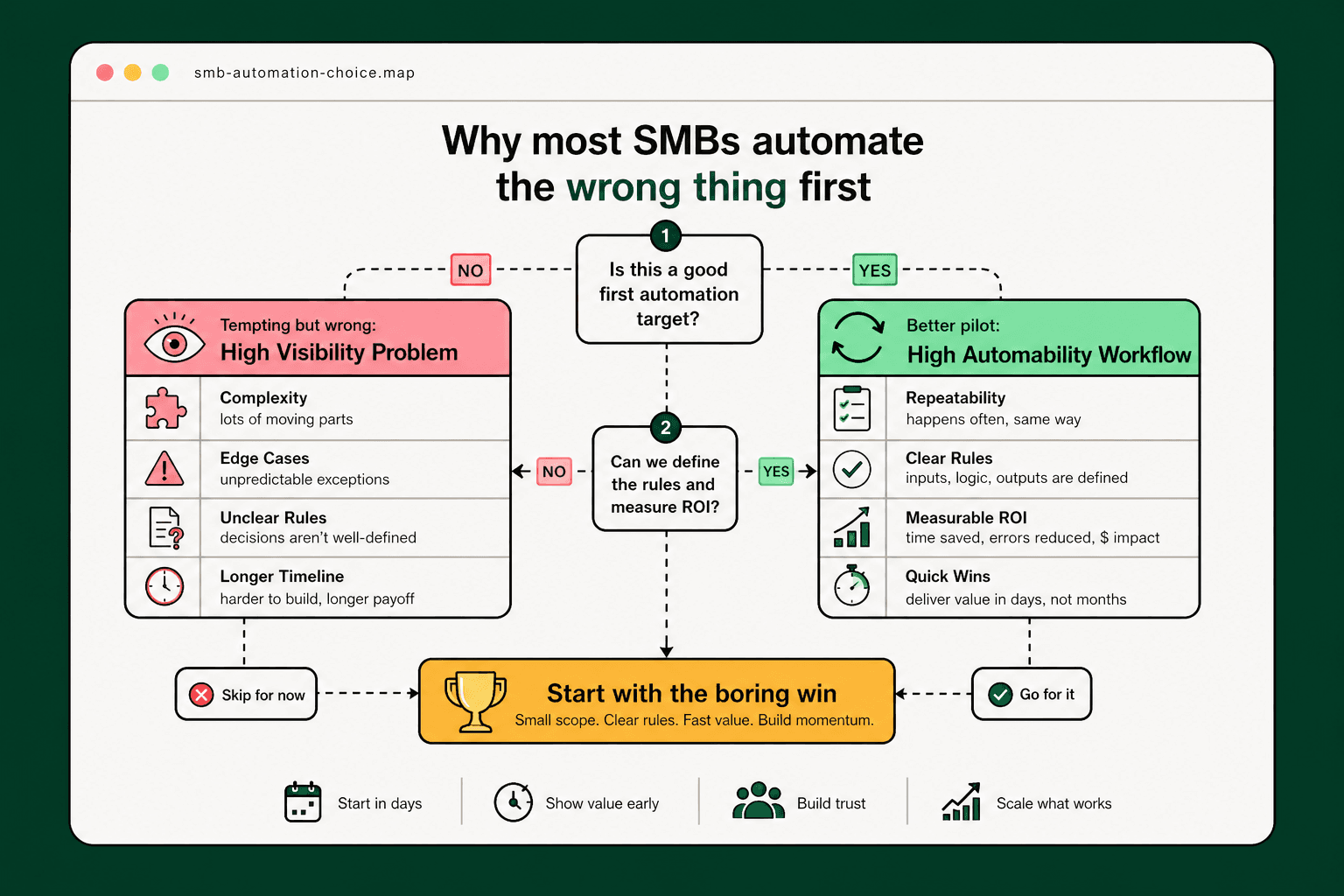
The most common AI automation mistake is not moving too fast. It is starting with the most visible problem instead of the most automatable one.
Read insight
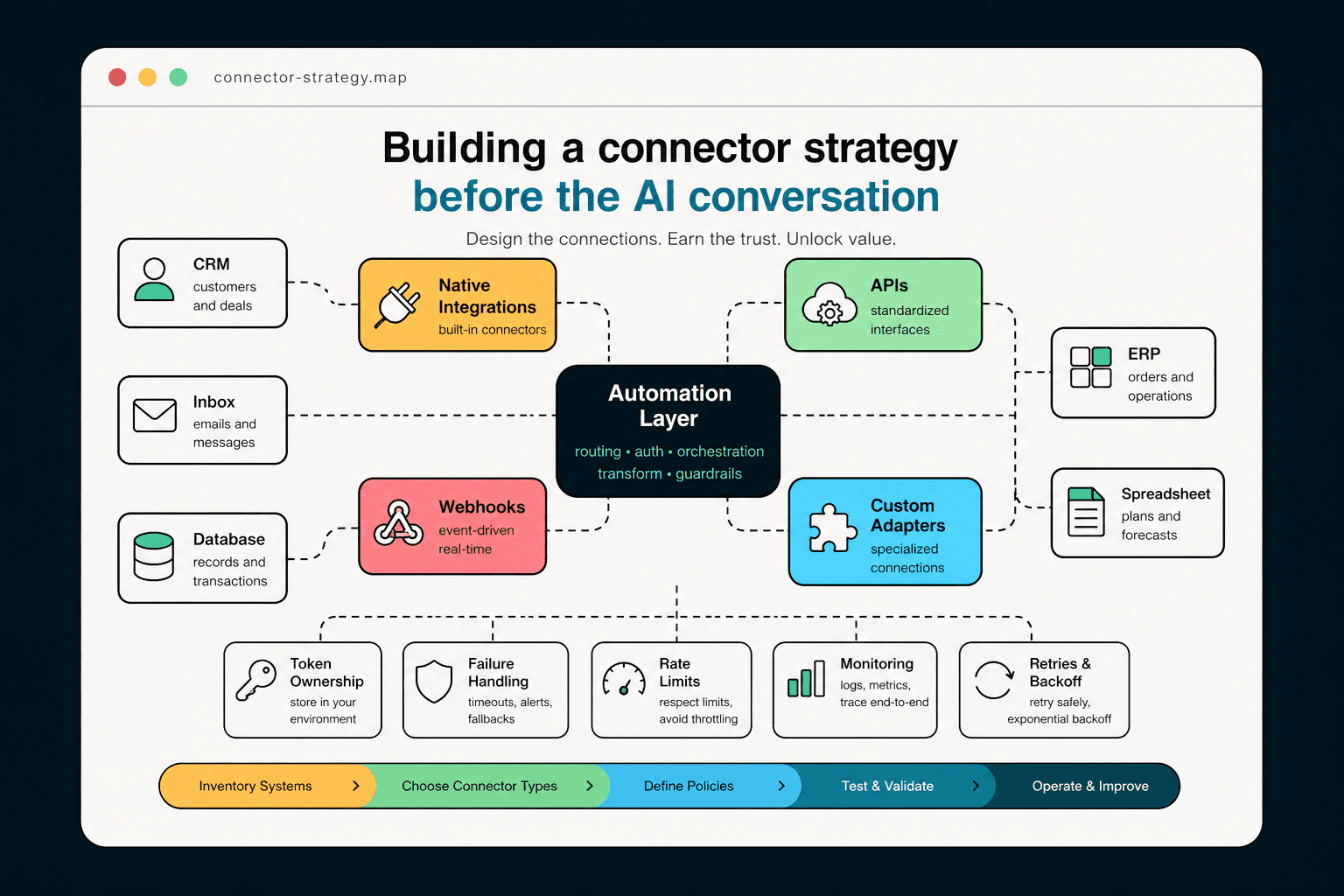
The bottleneck in most AI automation projects is not the model — it is the connections. Data that cannot be accessed cannot be automated.
Read insight
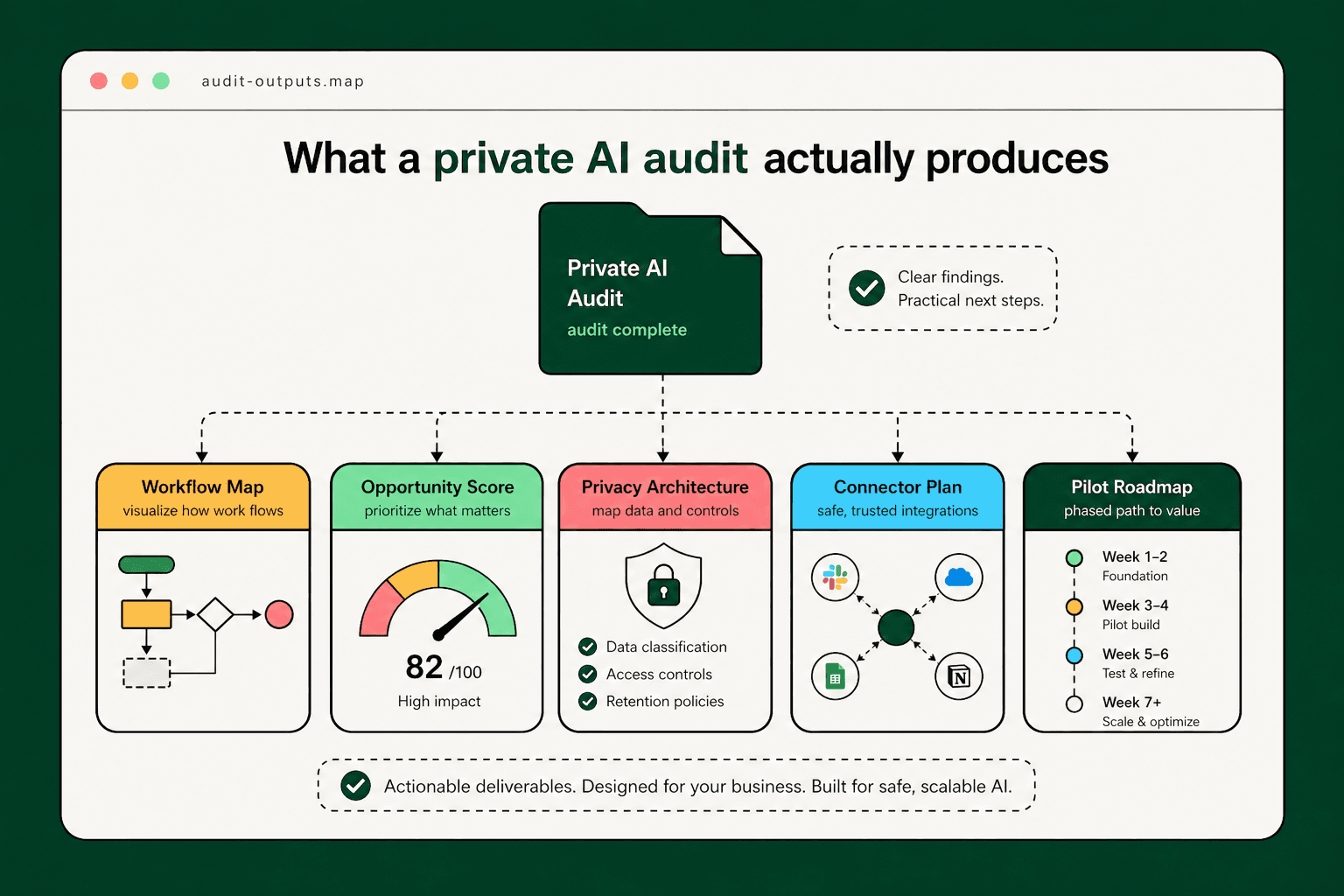
Most businesses know they need an AI strategy but are not sure what one looks like in practice. A structured audit produces concrete deliverables — not a deck of possibilities.
Read insight
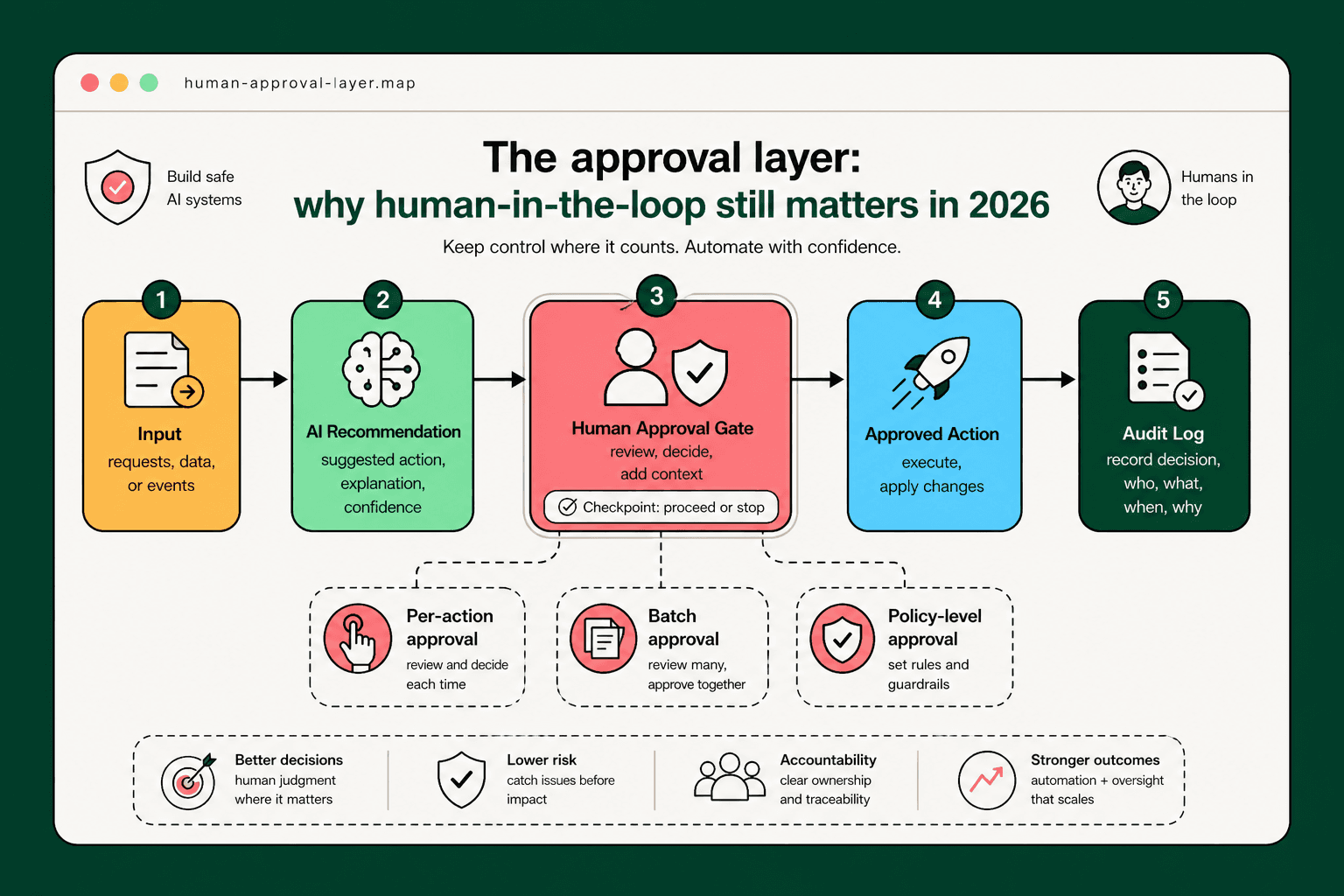
Autonomous AI action sounds like the goal. For most business workflows, it is not — and the businesses that learn this after a mistake pay a much higher price than those that build approval logic in from the start.
Read insight
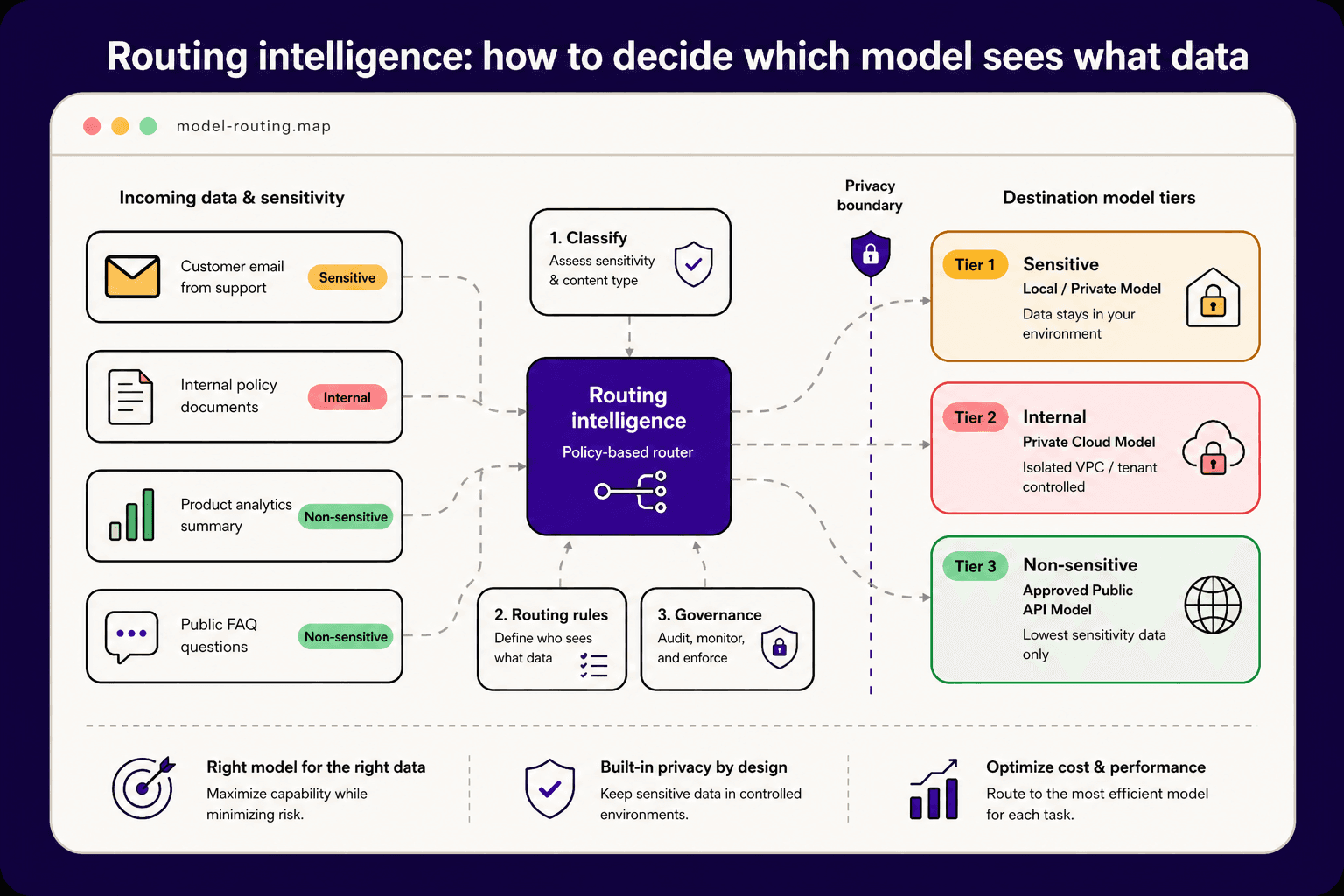
Not every AI task should use the same model. Intelligent routing — matching data sensitivity to model tier — is the architecture decision that most businesses skip and later regret.
Read insight
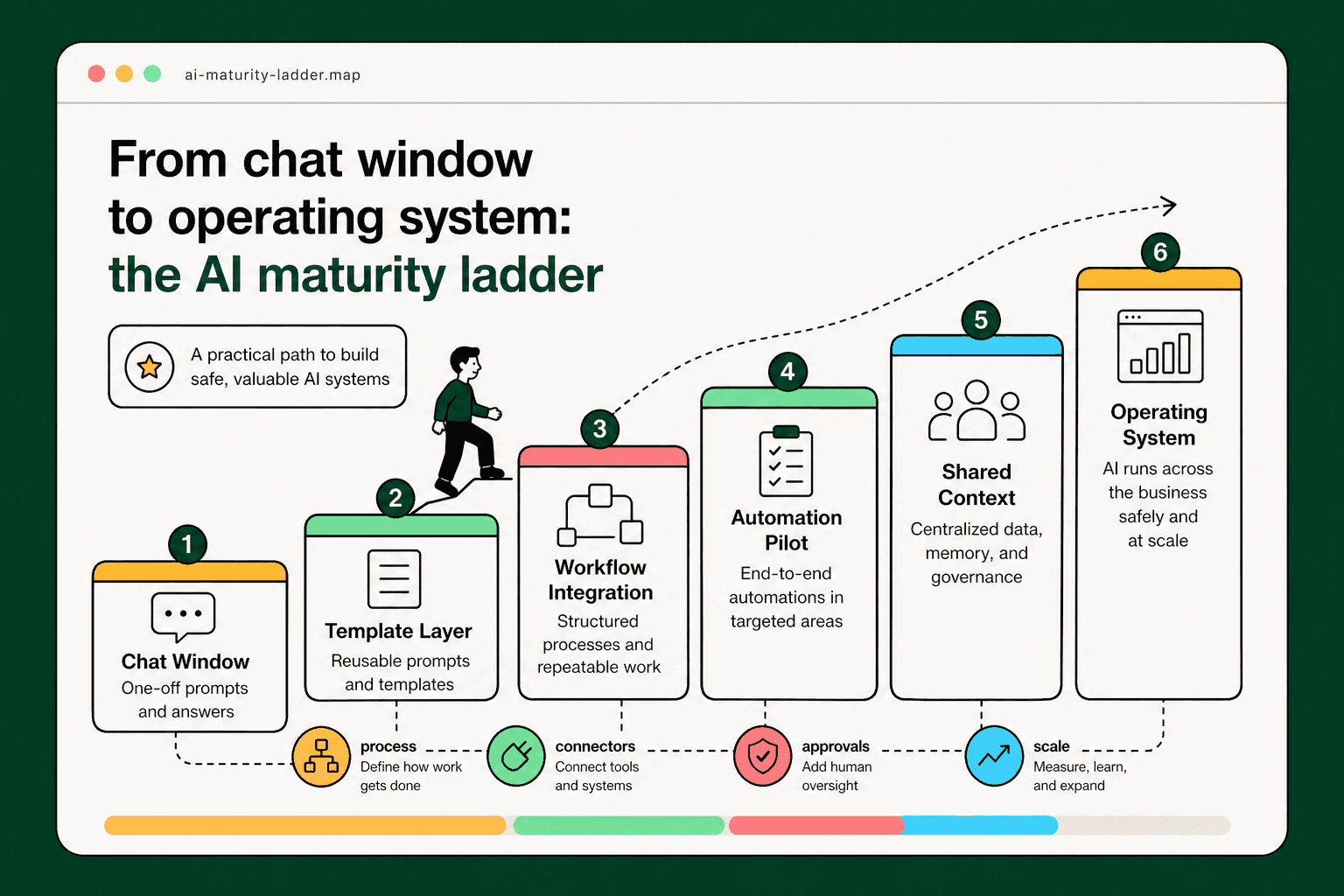
Most businesses are on the first rung of the AI maturity ladder without realizing there are five more above them. Understanding the ladder is the first step to climbing it.
Read insight
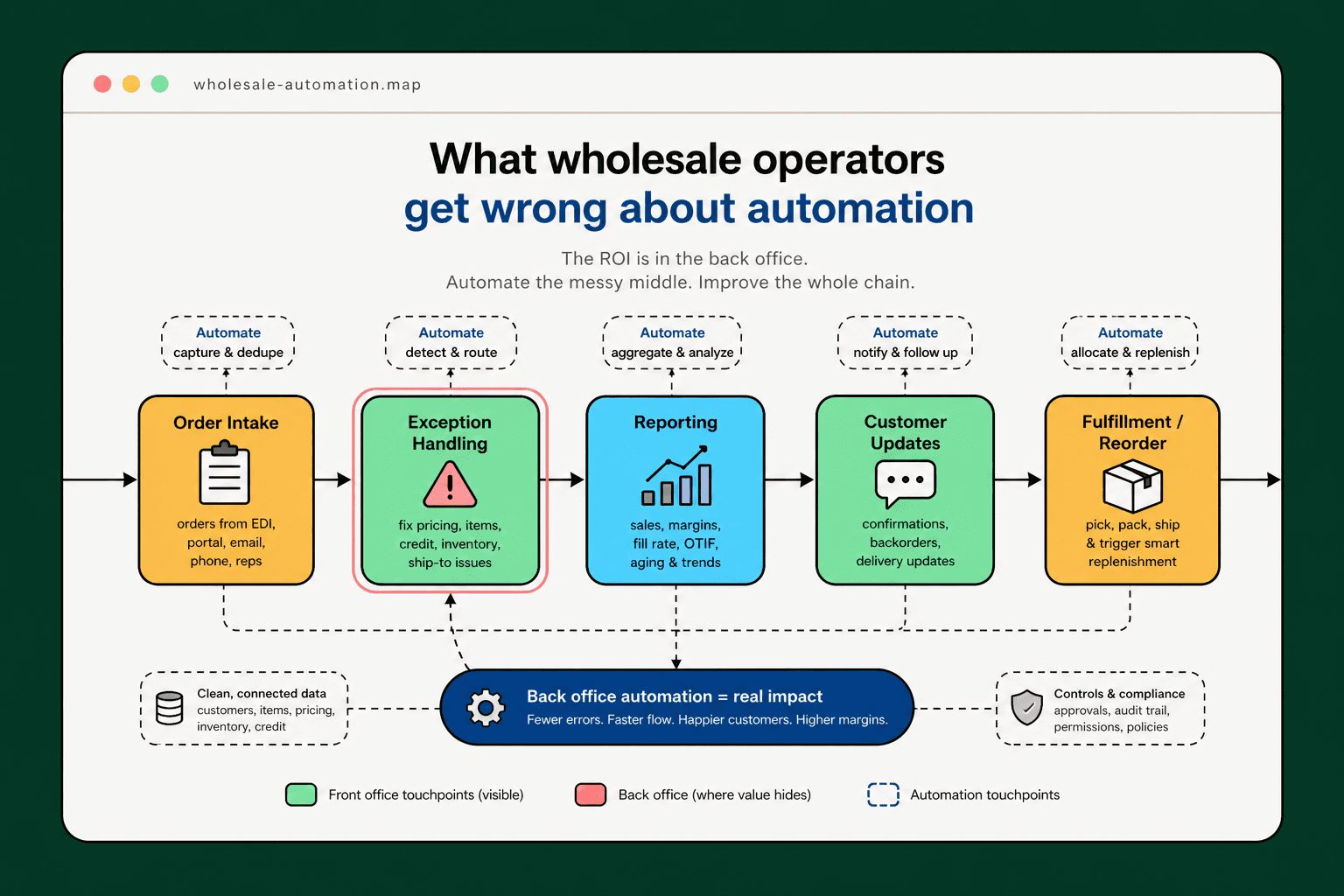
Wholesale and distribution businesses have some of the highest automation potential of any SMB category. They are also some of the most consistent in making the same three mistakes.
Read insight
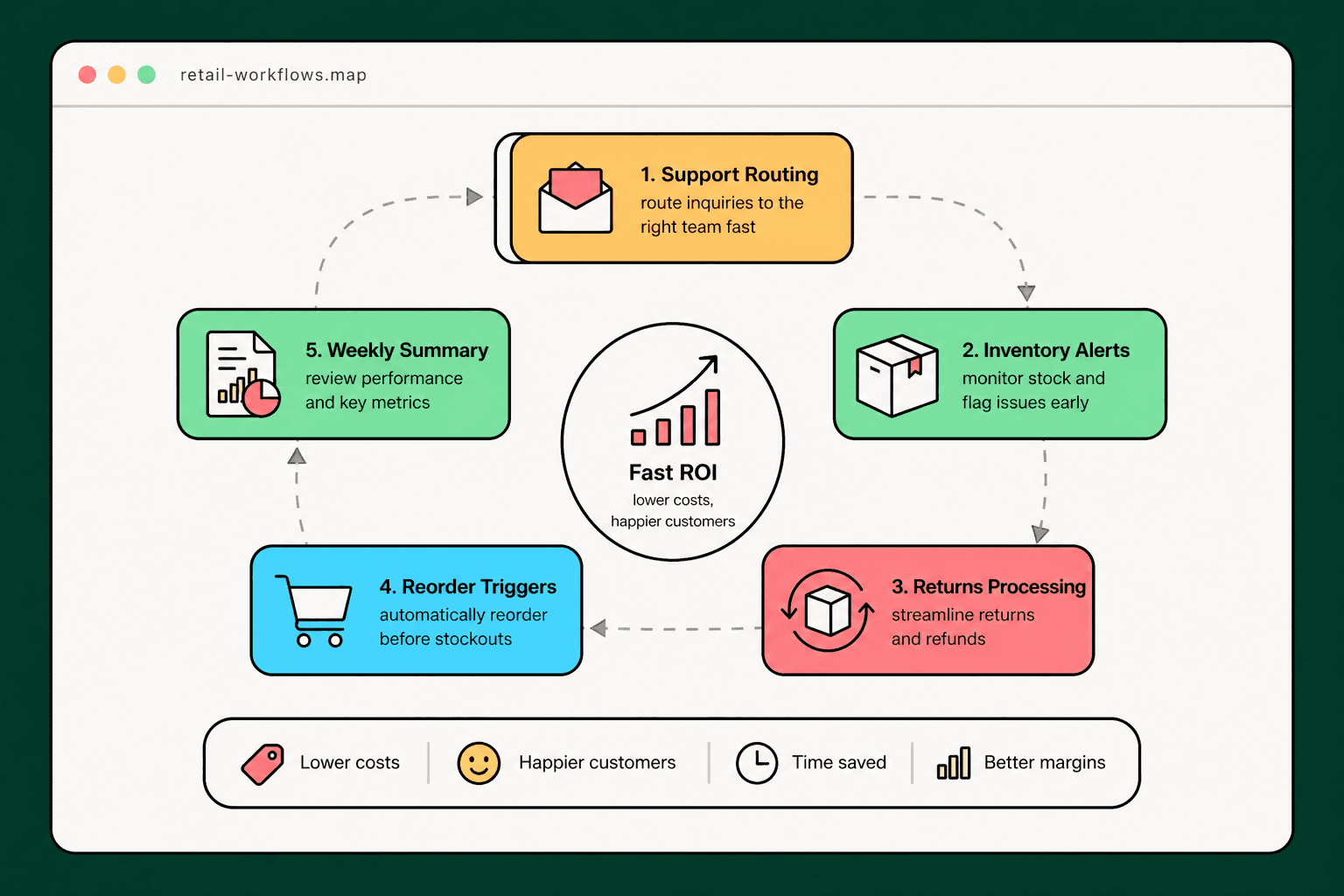
Not all automation pays back at the same rate. These five workflows consistently produce measurable results within the first 90 days for retail and product businesses.
Read insight
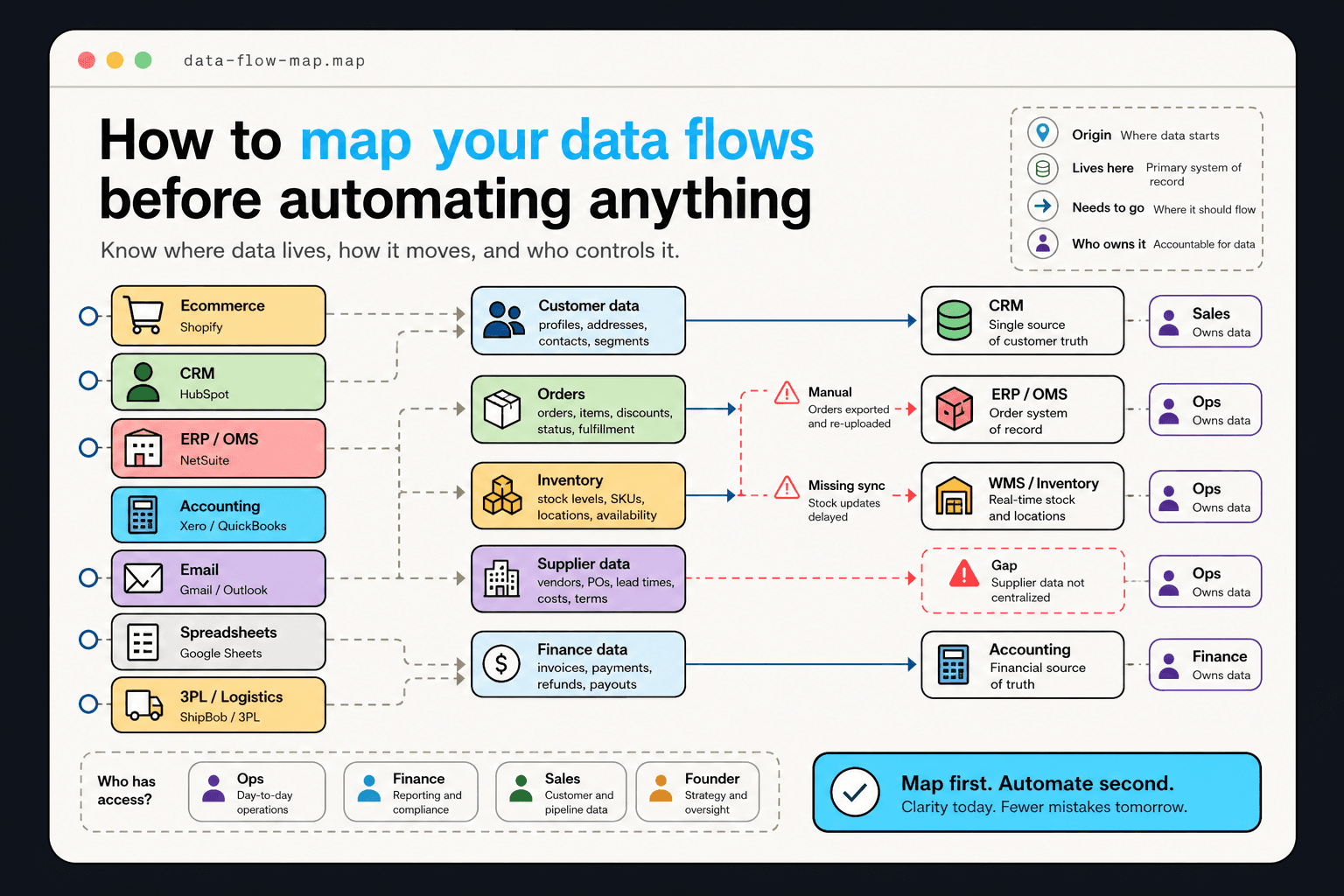
The businesses that build durable AI automation do one thing before writing a single workflow: they map where their data lives, how it moves, and who controls it.
Read insight
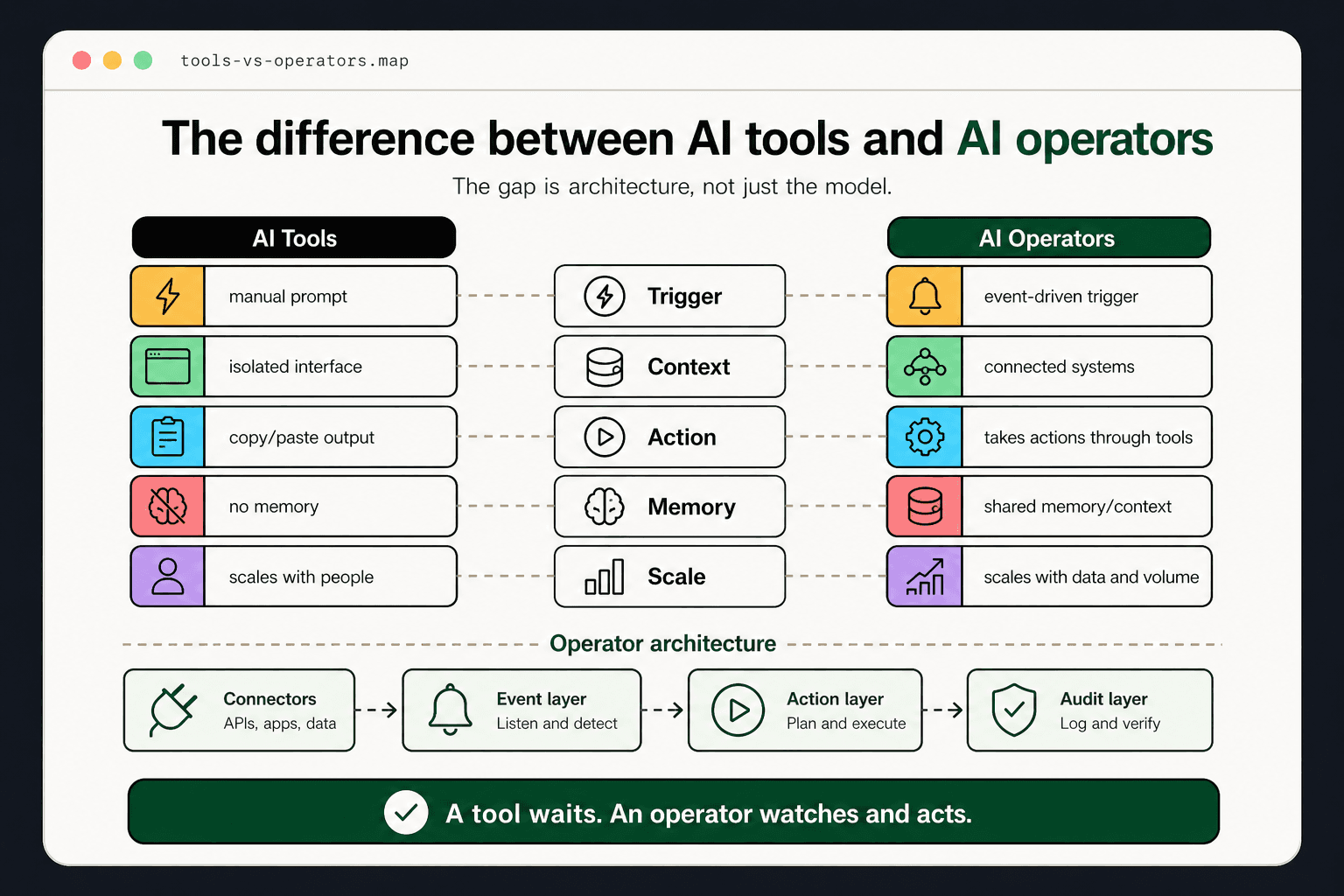
Most businesses are buying AI tools. Very few are building AI operators. The distinction determines whether AI stays a productivity add-on or becomes a competitive capability.
Read insight
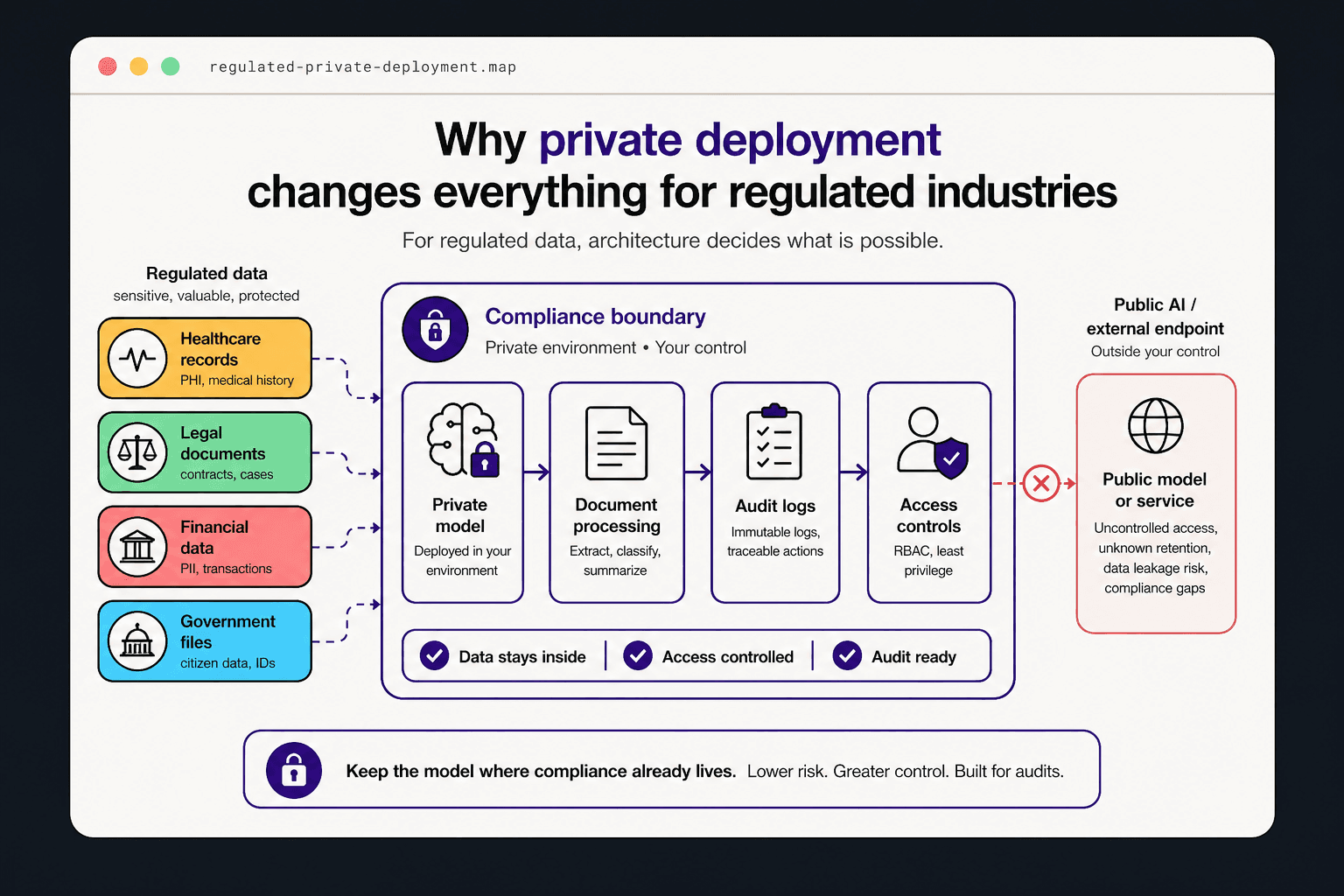
For businesses operating under industry compliance requirements, private AI deployment is not a premium option — it is often the only option that survives a regulatory conversation.
Read insight
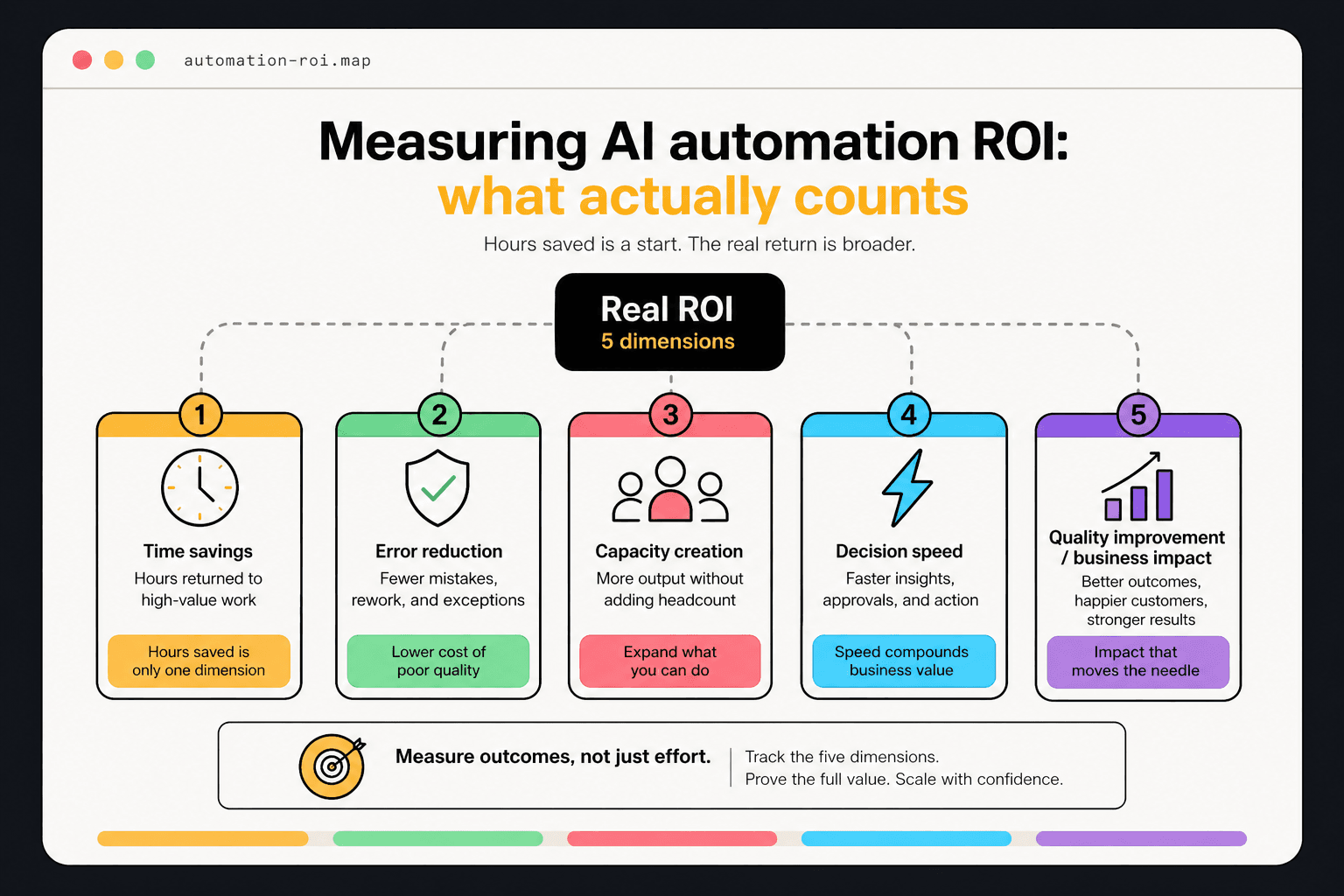
Hours saved is a start. But the businesses getting the most from AI automation measure four other dimensions that most ROI calculations ignore entirely.
Read insight
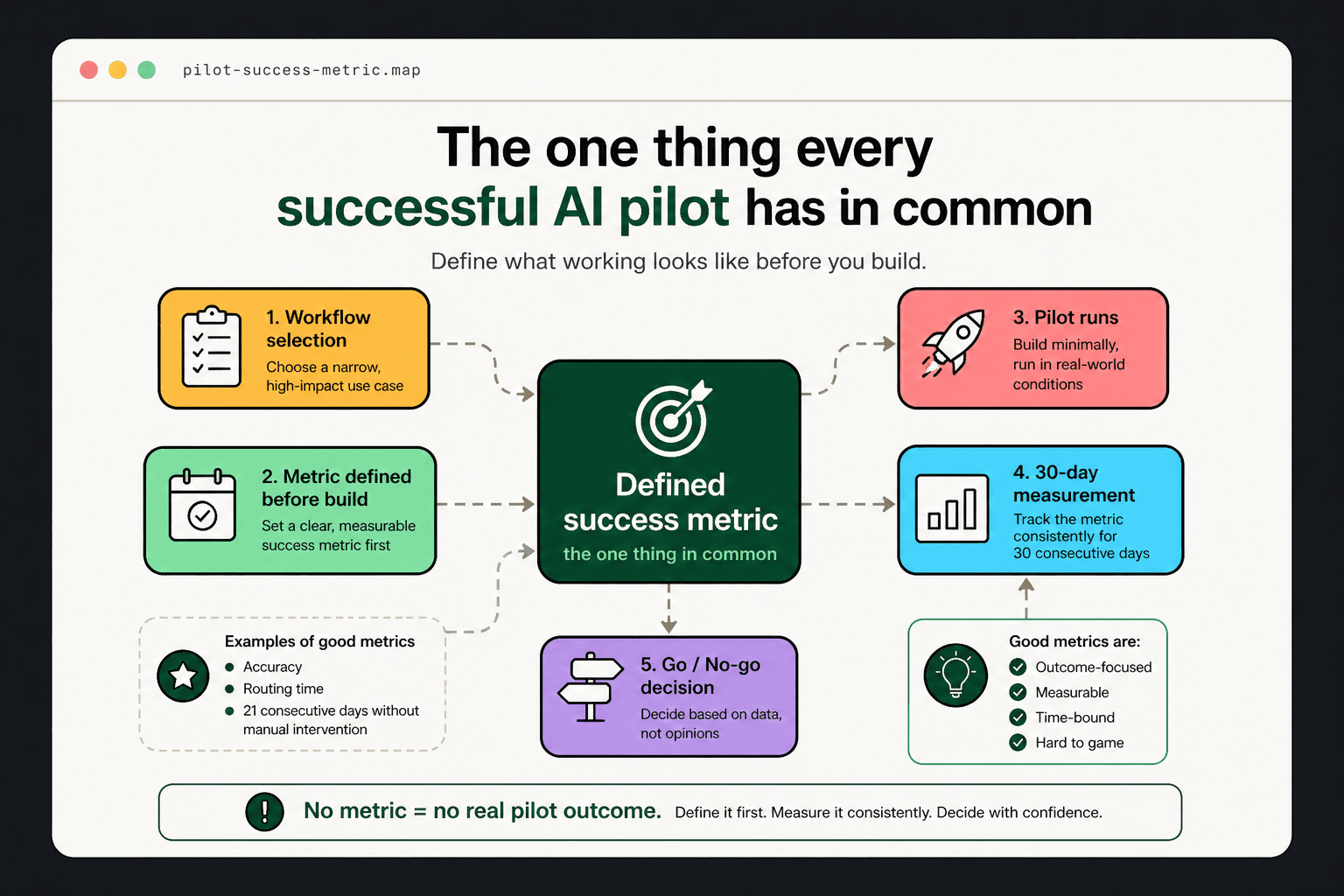
After working with businesses across retail, wholesale, professional services, and government, one factor predicts pilot success more reliably than the choice of model, tool, or workflow.
Read insight