Good leads sit too long
Forms, referrals, emails, and website chats arrive across channels. If no one qualifies, routes, and follows up quickly, the opportunity quietly loses momentum.

Deltabits builds AI sales, service, and operations systems for agencies, staffing firms, accounting teams, IT service providers, and consultants that want to grow without adding manual admin headcount.
Intake queue
Action trail
Clients and partners
Selected relationships across commerce, media, AI, consulting, and public-sector operations where software had to support live work, not just look impressive in a demo.
 Reason Clothing
 Otto Media
 GIA AI
 Viral Idea Marketing
 RSG Consulting
 Government of Barbados
 Government of The BahamasReason ClothingOtto MediaGIA AIViral Idea MarketingRSG ConsultingGovernment of BarbadosGovernment of The Bahamas
The B2B service growth gap
Service firms lose margin when expensive people keep chasing follow-ups, updating CRM, triaging client requests, copying data, and building reports by hand.
Forms, referrals, emails, and website chats arrive across channels. If no one qualifies, routes, and follows up quickly, the opportunity quietly loses momentum.
Sales notes, next steps, deal stages, meeting summaries, and owner assignments depend on busy people remembering to update another system.
Slack, email, calls, forms, docs, and project boards each hold part of the truth. The work slows down because no system owns the handoff.
Pipeline updates, client status, delivery risks, billing issues, and team activity are still assembled by hand when they should be generated from live systems.
What Deltabits builds
We do not sell generic AI ideas. We design the workflow, connect the tools, build the AI operator, and make sure it produces useful work inside the sales, service, admin, and reporting flow your team already uses.
AI employees
AI sales assistants, client intake operators, CRM analysts, reporting assistants, and admin agents built around clear responsibilities and approval rules.
Workflow automation
Lead capture, qualification, CRM updates, proposal prep, client request routing, document collection, task creation, and reporting across the tools your team already uses.
Voice and chat
Phone, website chat, email, Slack, Teams, and forms become intake points for qualification, routing, summaries, approvals, and next actions.
Internal intelligence
Search SOPs, summarize documents, update CRM records, surface stale opportunities, flag delivery risks, and turn scattered business data into decision-ready context.
How it starts
The B2B AI Workflow Audit turns scattered ideas into a practical roadmap: what to automate, what to avoid, what should stay private, and which first system is worth building.
Review the auditWe review how leads arrive, how clients request work, where CRM updates happen, which reports get built, and which handoffs depend on memory.
We separate workflows that can produce measurable savings or recovered revenue from AI ideas that look impressive but do not move the business.
We specify the agent role, tools, data access, escalation rules, approval gates, CRM actions, and reporting trail needed for the first build.
You receive a practical roadmap with scope, connector paths, operating rules, ownership, success metrics, and the implementation sequence.
Channels and connectors
Requests can start in chat, voice, forms, inboxes, or internal tools. The automation layer handles the app actions, APIs, webhooks, and custom adapters behind the scenes.
 WhatsAppAgent channel
 TelegramAgent channel
 DiscordAgent channel
 SignalAgent channelWhatsAppAgent channelTelegramAgent channelDiscordAgent channelSignalAgent channel
 HubSpotCRM & Sales
 GmailCommunication
 StripeFinance & Payments
 ShopifyE-commerce
 Google SheetsFiles & Docs
 NotionFiles & DocsHubSpotCRM & SalesGmailCommunicationStripeFinance & PaymentsShopifyE-commerceGoogle SheetsFiles & DocsNotionFiles & Docs
Field notes
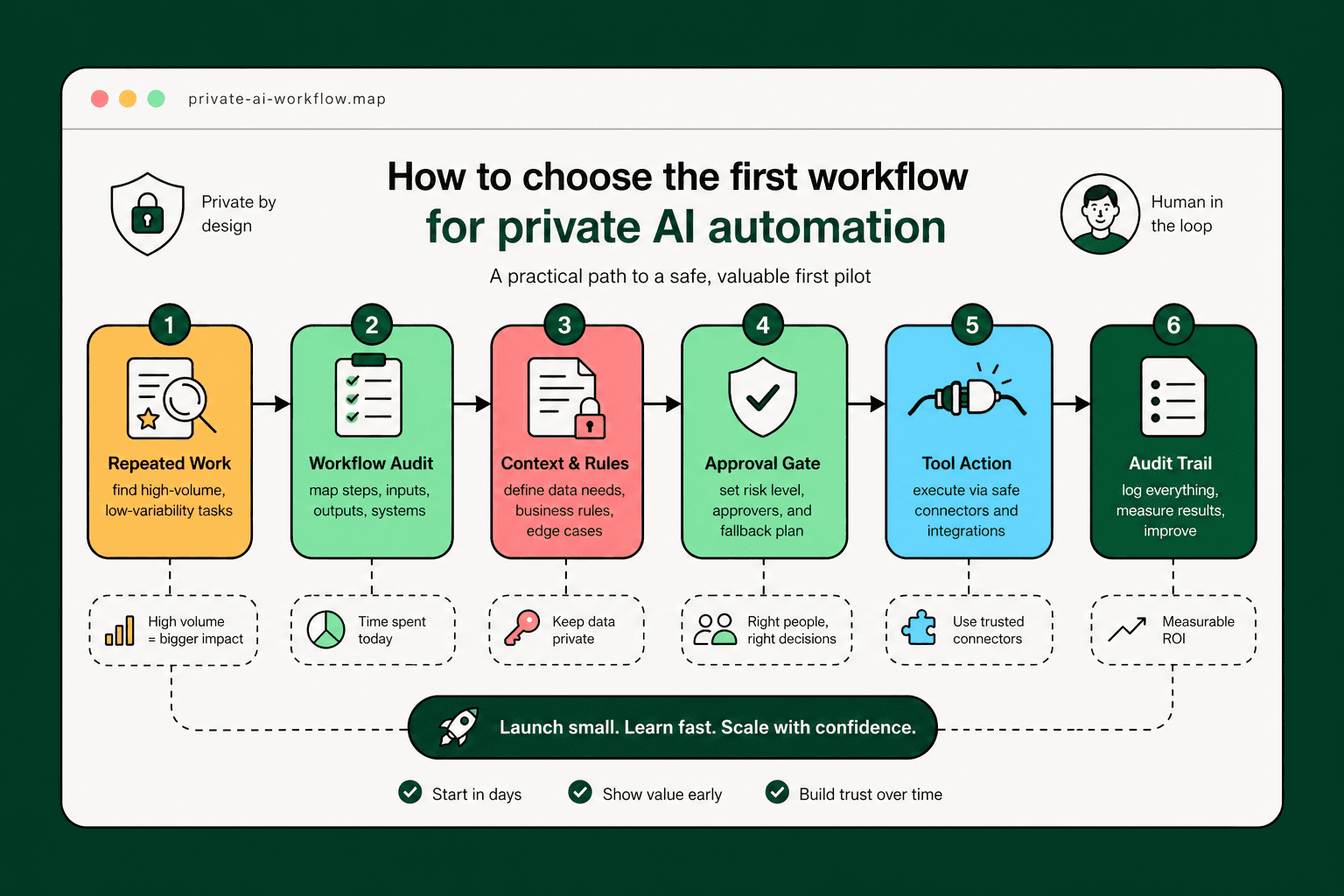
A practical operator guide for picking the first AI workflow: repetitive enough to matter, safe enough to ship, and connected enough to prove value.
Read insightWhy Deltabits exists
Years of shipping products, getting rejected, studying early AI, and building for real users led to one clear belief: businesses do not need more AI theater. They need systems that remove repeated work from the way they already operate.
That is why Deltabits starts with the workflow before the build. The story is not about a founder name. It is about the discipline of learning from each product until the mission became obvious.
Read the storyThe throughline
Operations are where software proves itself.
AI becomes powerful when it gives small teams leverage.
Busy operators need answers inside the rhythm of work.
Automation should return time to the people doing the work.
Help B2B service firms become AI-native without hiring an internal AI team.
Start with the B2B AI Workflow Audit
Get a workflow map, ROI ranking, security plan, and 30-day first-build roadmap before committing to implementation.